Date Published 28 April 2026
Tenant Information Sheet 2026: What it is and why it matters
Information Sheet
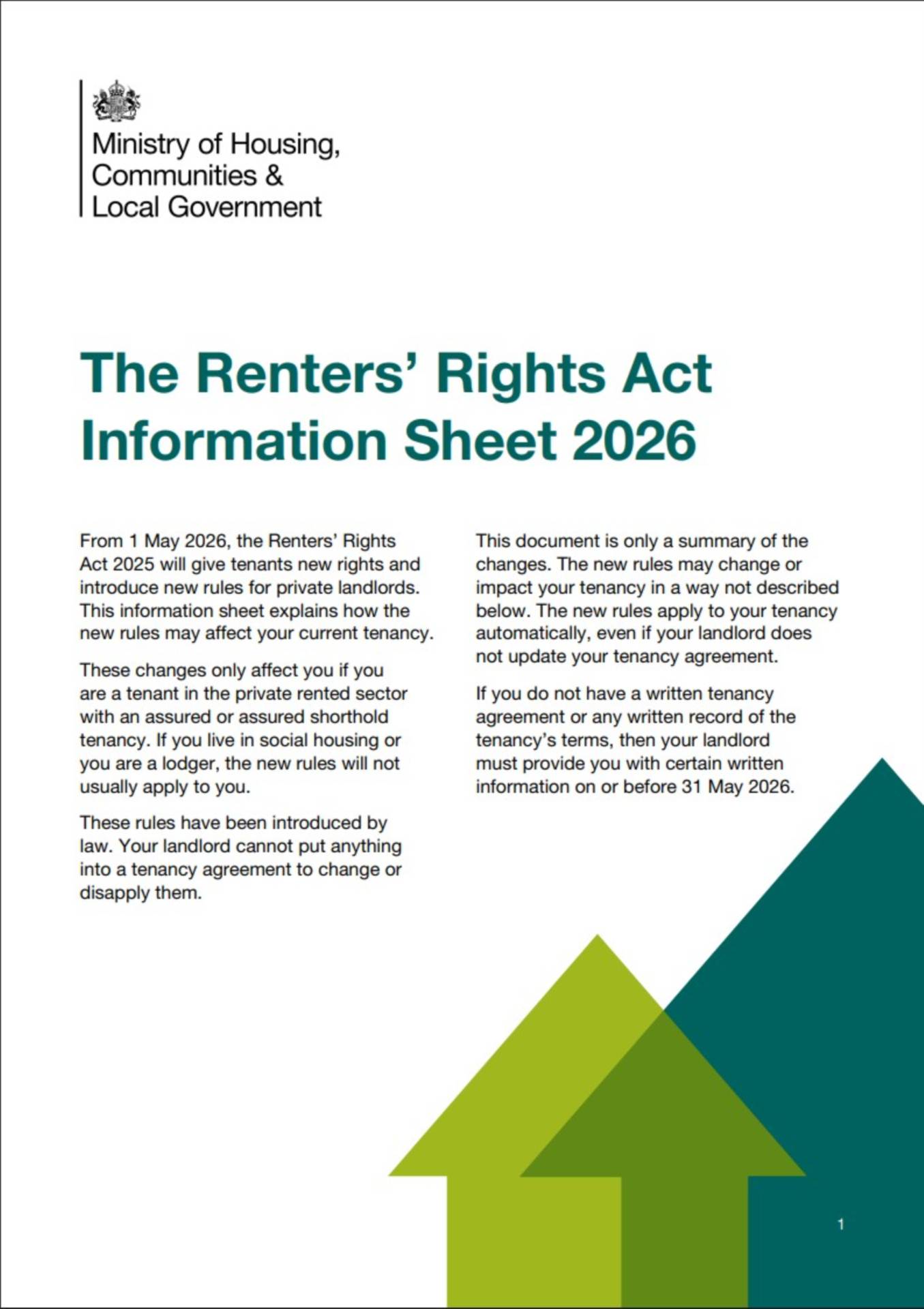
The tenant Information Sheet 2026 is a key document that landlords must provide under new legislation. Introduced as part of the Renters' Rights Act, it guarantees tenants are fully informed of their rights while placing clear legal and administrative responsibilities on landlords.
Understanding and correctly issuing the tenant Information Sheet is especially important when dealing with eviction matters. Errors in documentation can delay proceedings, invalidate notices, and expose landlords to penalties
What is a tenant Information Sheet?
A tenant Information Sheet is an official government-issued document that explains tenant rights and landlord obligations under current housing law. It forms part of the broader landlord tenant Information Sheet requirements and is designed to standardise information provided at the start of a tenancy.
The tenant contact Information Sheet is used by landlords and property managers to certify that tenants clearly understand their legal position, particularly in relation to tenancy terms, rent, and eviction procedures.
As an official Information Sheet, it must be provided in its original format and reflects the most up-to-date legal framework under the Renters' Rights Act.
When must the tenant Information Sheet be given?
The tenant Information Sheet 2026 must be provided when:
• The tenancy is an assured or assured shorthold tenancy
• The tenancy was created before 1 May 2026
• There is a written or partly written agreement
If these conditions apply, landlords are legally required to issue the tenant contact Information Sheet. Failure to do so can directly affect a landlord's ability to take enforcement action later, including eviction.
How do you provide the Information Sheet to tenants?
Landlords must follow strict rules when providing the tenant Information Sheet 2026:
• The official, unaltered document directly from the Government website must be used
• It can be printed and posted using a tracked delivery service or hand-delivered to the tenant
• It may be sent digitally, but only as an attachment (such as a PDF)
It is important to remember that you cannot send a link to the document or edit the PDF as this will not meet the legal requirements.
Providing the Information Sheet correctly makes sure landlords remain compliance.
What happens if you don't comply?
Failing to provide the Information Sheet 2026 is a breach of legal duties under the Renters' Rights Act.
Consequences may include:
• Tenant complaints to local authorities
• Enforcement action against the landlord
• Financial penalties:
o Up to £7,000 for an initial breach
o Up to £40,000 for ongoing non-compliance
Importantly, non-compliance can also prevent landlords from serving valid eviction notices or progressing possession claims, making it essential to get the process right from the start.
Key changes covered in the 2026 Information Sheet
Transition to periodic tenancies
The tenant Information Sheet explains the move away from fixed-term agreements towards periodic tenancies, giving tenants greater flexibility.
End of Section 21 evictions
The abolition of no-fault evictions means landlords must now rely on valid legal grounds when seeking possession.
Rent increase restrictions
New rules place limits on how frequently and how much rent can be increased.
Expanded tenant rights
The Information Sheet outlines enhanced tenant protections, including rights relating to pets, accessibility, and property standards.
Requirement for clear written tenancy terms
Landlords must provide clear, transparent tenancy agreements, reducing ambiguity and disputes.
FAQs
What is a tenant Information Sheet?
A tenant Information Sheet is an official document that outlines tenant rights and landlord responsibilities under current housing law.
Is the Information Sheet legally required?
Yes, in specific cases under the Renters' Rights Act, landlords must provide it.
Can I email the tenant Information Sheet?
Yes, but only as an attachment, not a link.